What the Green, Black and Red Staining on Your Norfolk Roof Actually Is
Not every stain on a roof means the same thing. A property owner researching roof cleaning Norfolk companies for the first time is often surprised to learn that the green patch on one slope, the black smudging around a chimney, and the rusty-orange streak running down from a bracket are three separate problems with three separate causes. Treating them as one issue, or ignoring the two that are not bright green, is one of the most common mistakes homeowners make when assessing their own roof.
This guide breaks down what each colour actually is, why Norfolk's coastal, low-lying, tree-shaded environment produces all three so readily, and what each one means for the health of the roof underneath it.
The quick answer: Green staining is almost always moss or algae feeding on moisture and shade. Black staining is usually a mix of airborne soot, organic debris and dark-coloured lichen building up in the least-washed parts of the roof, often near chimneys and valleys. Red or orange staining is most often a naturally occurring algae called Trentepohlia, though it can also be rust bleeding from an iron fixing such as a nail, bracket or flashing. All three benefit from professional cleaning, but only one of them, the rust, points to a problem beyond the roof surface itself.
1. Green staining: the moss and algae most Norfolk homeowners recognise
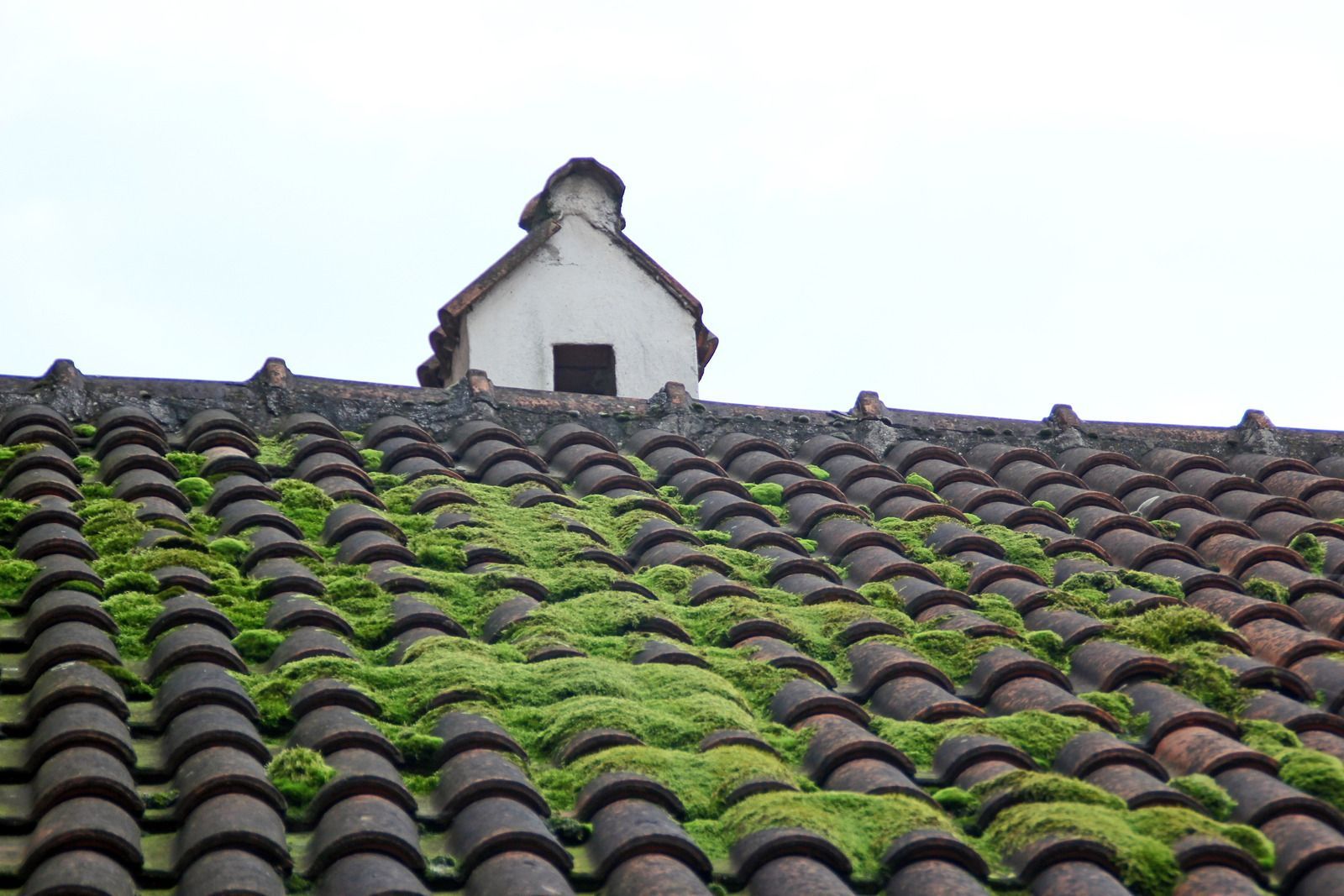
Green is the colour everyone associates with a roof that needs attention, and for good reason. It is caused by moss and green algae establishing themselves on tile surfaces that stay damp for extended periods, typically shaded or north-facing slopes, roofs near mature trees, and anywhere close to Norfolk's rivers, Broads and coastline where ambient humidity runs higher than average.
Moss forms a raised, cushion-like texture you can usually feel as well as see, while green algae tends to sit flatter against the tile, sometimes giving the whole slope a faint green tint before individual patches are visible. Both feed on the same conditions, so a roof showing one will often develop the other given enough time.
2. Black staining: soot, organic debris and dark lichen
Black staining is less understood than green, partly because it has more than one cause. On many Norfolk roofs, particularly older properties in Norwich and the county's market towns, black discolouration builds up around chimney stacks and in roof valleys, where airborne particulates from fires, traffic and general urban dust settle and are washed by rain into the same low points repeatedly.
Dark, crustose lichen species also contribute, forming tight, flat patches that can look almost like dirt rather than a living growth. Unlike moss, black lichen bonds very closely to the tile surface and does not wash off with plain water, which is often what leads homeowners to describe it, inaccurately, as a stain that "won't come off with rain."
Because black staining tends to concentrate around chimneys, flashing and valleys rather than spreading evenly, it is frequently mistaken for a structural or damp problem rather than a surface growth issue. A proper inspection usually resolves the question quickly.
3. Red and orange staining: Trentepohlia algae and rust, two very different causes
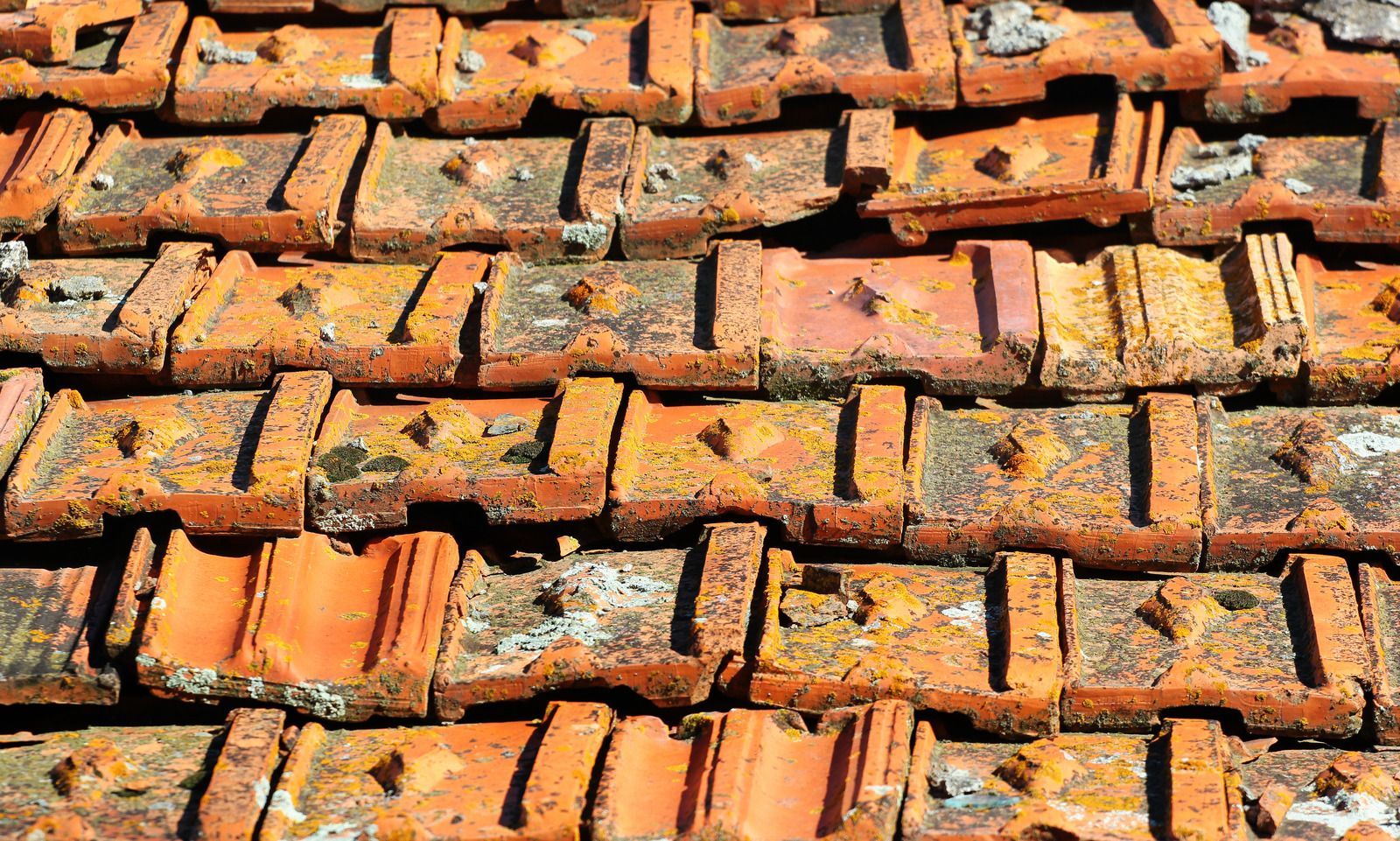
Red or orange staining catches people out more than any other colour, mainly because it looks unnatural on a roof and is often assumed to be something structural. In most cases it is neither dirt nor damage. Trentepohlia is a genus of algae that produces a distinctive orange-red pigment, and it is well documented on renders, walls and roof surfaces across the UK, particularly in damp, shaded or coastal locations. It behaves much like green algae in terms of the conditions it needs, it simply produces a different colour as it grows.
The second cause is rust. Where a roof has iron or mild steel fixings, old nails, brackets, or flashing that has begun to corrode, rainwater carries fine rust particles down the tile below, leaving a streak that starts orange and darkens toward brown over time. This is the one colour of the three that is not, by itself, a plant or organism, and it is worth having checked specifically, since it can indicate that a fixing needs replacing rather than just cleaning.
4. Why Norfolk's climate produces all three colours so readily
Norfolk's combination of a long, low-lying coastline, extensive wetland around the Broads, and a landscape with relatively few hills to break up damp air means moisture tends to linger on exterior surfaces longer than in many other parts of the country. That lingering moisture is the common thread behind green algae, black lichen and Trentepohlia alike, even though each organism has slightly different preferences for shade, nutrients and surface texture.
Properties closer to the coast, around Cromer, Sheringham, Wells-next-the-Sea and Hunstanton, tend to show staining fastest because salt-laden sea air keeps surfaces from drying out fully between weather systems. Further inland, around Norwich, Dereham and the market towns, tree cover and shaded aspects play a bigger role than sea air, but the outcome, staining that returns faster than expected, looks much the same.
5. Flint, pantile and render: why Norfolk's older buildings show staining clearly
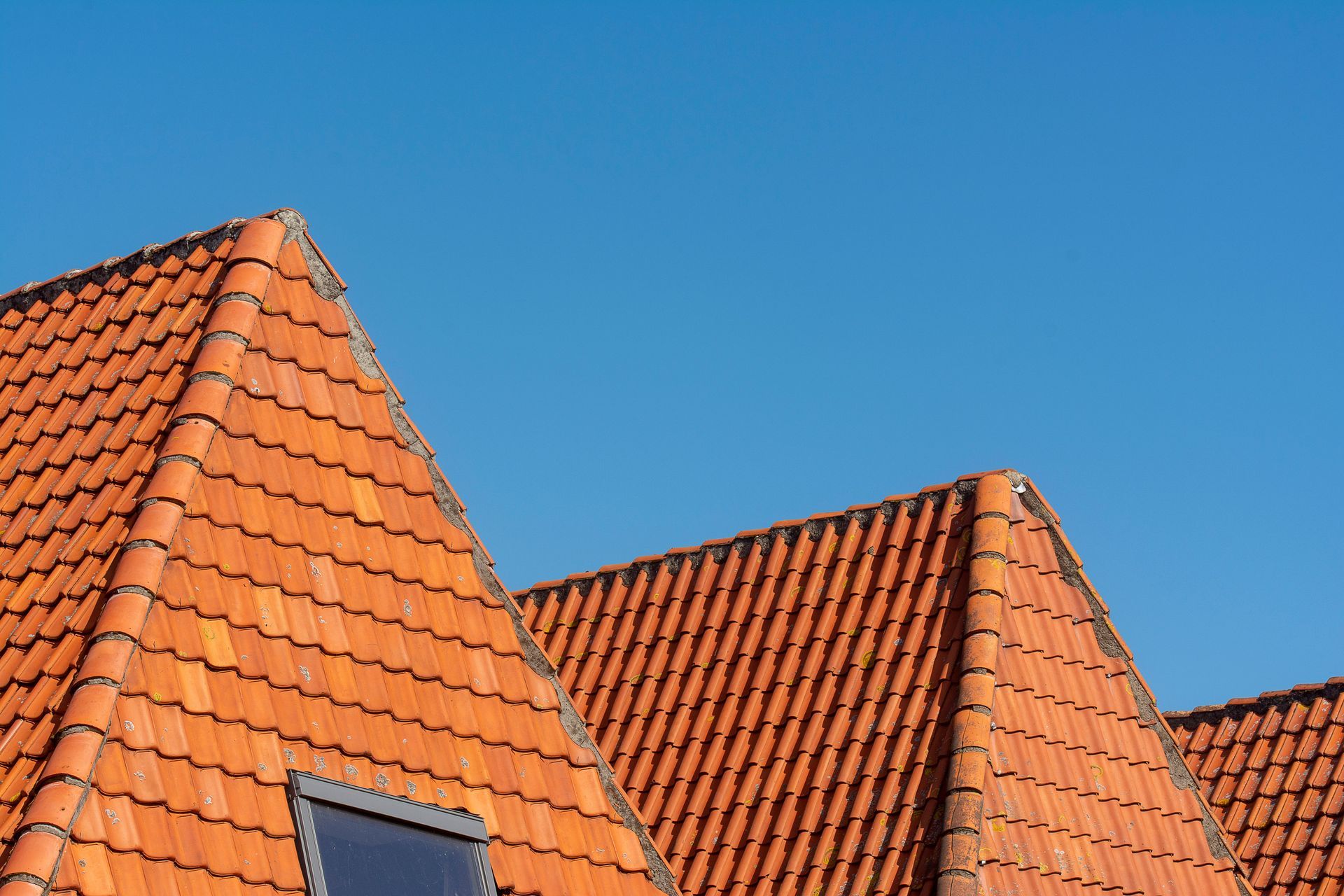
Norfolk's traditional building materials make staining more visible than it might be elsewhere. Clay pantiles, the curved, s-shaped tile common across East Anglia since the seventeenth century, have a naturally porous, textured surface that both holds moisture and gives algae and lichen something to grip. Flint, used extensively on walls across the county and famously on Norwich's many medieval churches, shows staining differently again, since its irregular surface creates countless small shaded pockets.
Anyone wanting the fuller picture of how Norfolk's building materials interact with moss and algae growth can read the detailed breakdown in why Norfolk's flint and pantile roofs are a magnet for moss, which covers the underlying material science in more depth than staining colour alone.
6. Does the colour of the staining tell you how urgent the problem is?
To a degree, yes. Green staining is the easiest to catch early because it is the most visible against most tile colours, and it responds well to a standard clean. Black staining often signals a roof that has gone longer without attention, since it tends to build up gradually in low points rather than appearing suddenly. Red or orange staining deserves the closest look, not because Trentepohlia itself is more damaging than green algae, but because it is the one colour that sometimes points to a genuine metal fixing problem rather than a purely biological one.
None of the three, on their own, mean the roof structure is failing. All three, left long enough, contribute to the same underlying risks: trapped moisture, lifted tiles and blocked gutters.
7. What professional cleaning changes for stained roofs
A soft wash treatment, using low pressure combined with a biocide solution, is generally the safest way to remove green algae, black lichen and Trentepohlia from Norfolk's older, more porous tiles without stripping their surface or driving water underneath overlaps. Pressure washing, by contrast, can force water into gaps not designed to take it and etch the surface of a clay pantile, which often makes future staining set in faster rather than slower.
The full case for choosing a gentler method on Norfolk's period roofs, and why it protects the tile as well as clears the stain, is set out in soft washing: the safe way to clean Norfolk's period clay pantile roofs.
8. Staining and blocked gutters: the connection homeowners often miss
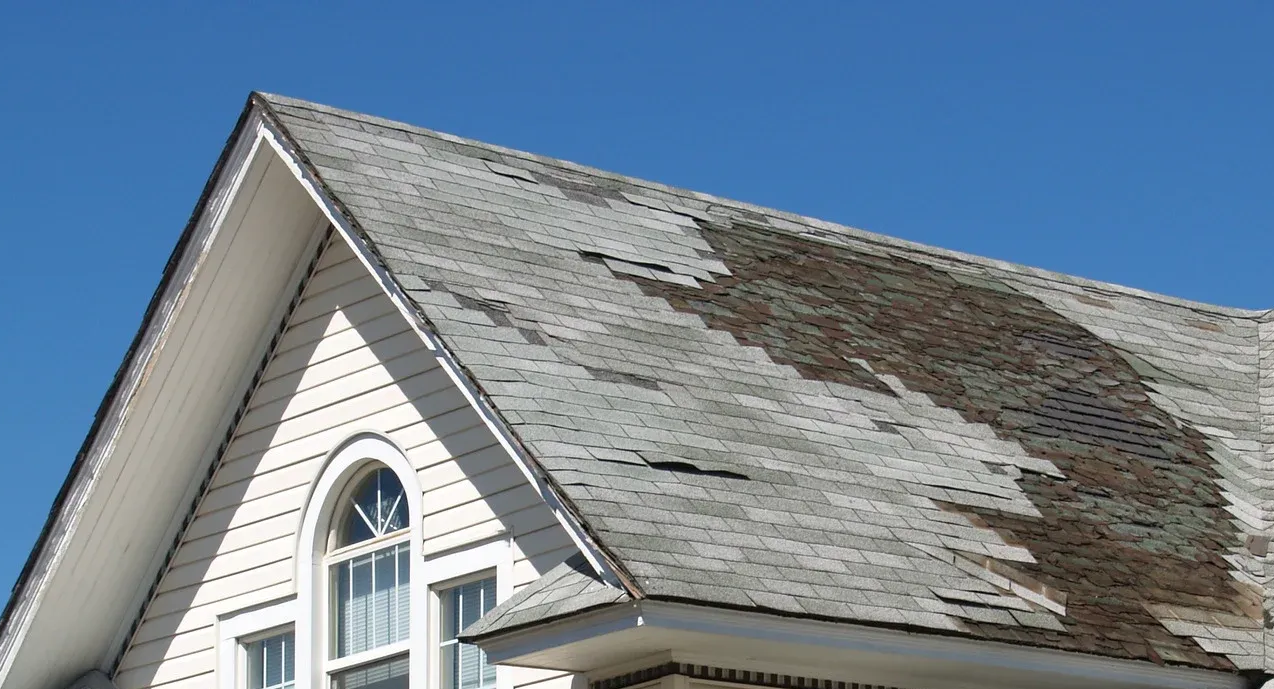
All three types of staining eventually shed material, moss clumps, flakes of dead lichen, and fine algal residue, into the gutter below. Once there, they combine with leaf litter and general silt to form the kind of blockage that causes overflow during heavy rain rather than a slow, manageable trickle. A roof with visible staining across two or three colours is frequently paired with gutters that need clearing more often than the homeowner expects, and the two issues are worth addressing together rather than separately.
9. When to get a professional opinion rather than guessing
Because red and orange staining can indicate either a harmless algae or a fixing that needs replacing, and because black staining can be mistaken for a damp problem originating inside the roof, a short professional assessment is usually the fastest way to know exactly what is on a particular roof and what, if anything, needs to happen beyond a standard clean.
- Green, cushion-like patches on shaded or north-facing slopes, usually moss rather than algae.
- Black discolouration concentrated near chimneys or valleys that does not wash away in rain, typically soot residue combined with crustose lichen.
- Orange or red streaking below a metal fixing such as a nail, bracket or section of flashing, worth checking for rust rather than assuming algae.
- A general orange-red tint across a shaded or coastal slope without an obvious metal source nearby, most likely Trentepohlia algae.
- Any staining paired with slow-draining or overflowing gutters , a sign that shed debris from the roof has already begun collecting below.
Frequently Asked Questions
Is black staining on a roof dangerous?
Not on its own. It is usually a combination of soot, organic debris and dark lichen rather than anything structural, though a heavy build-up over many years can hold moisture against the tile in the same way moss does.
How do I know if red staining is algae or rust?
Trentepohlia algae tends to spread as a broader, softer-edged tint across a slope, while rust streaks are usually narrow and run directly downhill from a specific fixing such as a nail or bracket. If in doubt, a professional inspection can confirm which one you are looking at.
Can I remove staining myself with a hosepipe or scrubbing brush?
Green algae sometimes lifts partially with water alone, but black lichen and Trentepohlia are more firmly attached and usually need a proper treatment to remove fully. Scrubbing directly on clay pantiles or concrete tiles risks cracking or dislodging them, so this is generally best left to a professional.
How much does roof cleaning cost in Norfolk?
Cost varies with roof size, pitch, access and how much staining and moss has built up, so a specific quote for the property is more useful than a generic figure. As a general guide, roofs needing work across all three staining types, or with harder-to-reach areas, tend to sit toward the higher end of the local market range.
Will the staining come back after cleaning?
Some regrowth over time is normal, particularly on shaded or coastal slopes where the underlying moisture and shade conditions have not changed. A biocide treatment applied during a soft wash slows this considerably compared with a rinse alone.
Does staining mean my roof needs replacing?
Almost never on its own. Green, black and red-orange staining are surface issues that respond to cleaning. The exception is if rust staining points to a corroding fixing, in which case that specific fixing, not the whole roof, is what may need attention.
Not sure what the staining on your roof actually is?
Ben's Roof Cleaning provides professional roof cleaning and moss removal across Norfolk, with over 15 years of experience. Get in touch or call 0132 880 0373
for a free, no-obligation quote.
Every Colour of Staining Has a Cause, and a Fix
Green, black and red staining on a Norfolk roof are three different biological and physical processes, not three degrees of the same problem, and understanding which is which changes how a homeowner should respond. Green points to moss and algae feeding on shade and damp. Black usually means airborne soot and dark lichen settling in the roof's least-washed corners. Red or orange is most often a naturally occurring algae, though it is the one colour worth checking against a possible rust source. Whichever combination shows up on a particular roof, the underlying driver across Norfolk is almost always the same: persistent moisture that the local climate, coastline and building materials all make hard to avoid.