Why Norfolk's Flint and Pantile Roofs Are a Magnet for Moss
Anyone who has walked the flint lanes of Norwich, cycled between the villages that ring the Broads, or driven the coast road past Cromer and Holt will have noticed the same thing: moss. It clings to church towers, cottage roofs and garden walls in a way that feels particular to this county. Moss removal Norfolk homeowners look into each spring is rarely a sign of neglect. It is largely the result of two things working together, the county's traditional building materials and its damp, low-lying weather. Flint walls hold moisture in their mortar joints, and the clay pantiles that cap so many Norfolk roofs create a ridged, shaded surface where spores settle and take hold. Understanding why this happens is the first step toward keeping a roof sound rather than reacting only once moss has already spread.
The quick answer: Norfolk's flint and clay pantile roofs attract moss because the county combines a naturally humid, low-lying landscape shaped by the Broads and the North Sea with roofing materials that hold moisture and organic debris longer than smooth modern surfaces. Pantiles have a curved profile that traps damp in their troughs, and old flint and lime mortar absorb and release water slowly. Regular moss removal and roof cleaning protects the tiles, the pointing, and the guttering underneath from long-term damage.
1. A Landscape Built From Local Stone
Norfolk has almost no natural building stone of its own, so for centuries builders turned to what the ground actually offered: flint. Nodules of flint, weathered out of the chalk that underlies much of the county, were knapped, squared and set into lime mortar to build everything from field walls to parish churches. This is why flint remains the defining material of the Norfolk skyline, from the round-towered churches of the countryside to the terraced cottages of Norwich's older streets.
The most decorative use of flint, known as flushwork, combines knapped flint with dressed stone to create patterns on church towers and porches. Norwich itself holds some of the finest examples, including the flushwork at St Peter Mancroft and St Michael Coslany, most of it dating from the second half of the 15th century when the Perpendicular Gothic style was at its height. That same knapped flint, precise and tightly jointed, sits right alongside the plainer rubble flint used on humbler buildings, and both textures give moss plenty of rough surface and lime mortar to colonise.
Because flint walls are usually finished with lime mortar rather than modern cement, they breathe and hold moisture differently to newer construction. That slow absorption and release of water is exactly the kind of damp, stable surface that moss spores need to germinate, which is one reason older Norfolk properties often show moss and algae growth years before a modern estate a few miles away does.
2. Clay Pantiles: A Dutch Import That Became a Norfolk Trademark
The pantile roofs that sit above so many of those flint walls are not, strictly speaking, a native Norfolk material either. Clay pantiles first appeared in eastern England during the 17th century, arriving from Holland aboard trading vessels, often carried as ballast on ships bringing goods into East Anglia's ports. They found a natural home along the eastern coast, and Norfolk and Suffolk remain two of the counties where they are most closely associated with the local look.
A pantile's distinctive S-shaped profile is what gives Norfolk roofscapes their gentle, undulating appearance. The tiles interlock in a side-lap arrangement, with the downturned edge of one tile overlapping the upturned edge of the next, and they are roughly a third lighter than flat clay tiles. That lighter weight let older Norfolk buildings, many with slender timber roof structures, carry a full clay roof without needing the heavier framing that flat tiles demand.
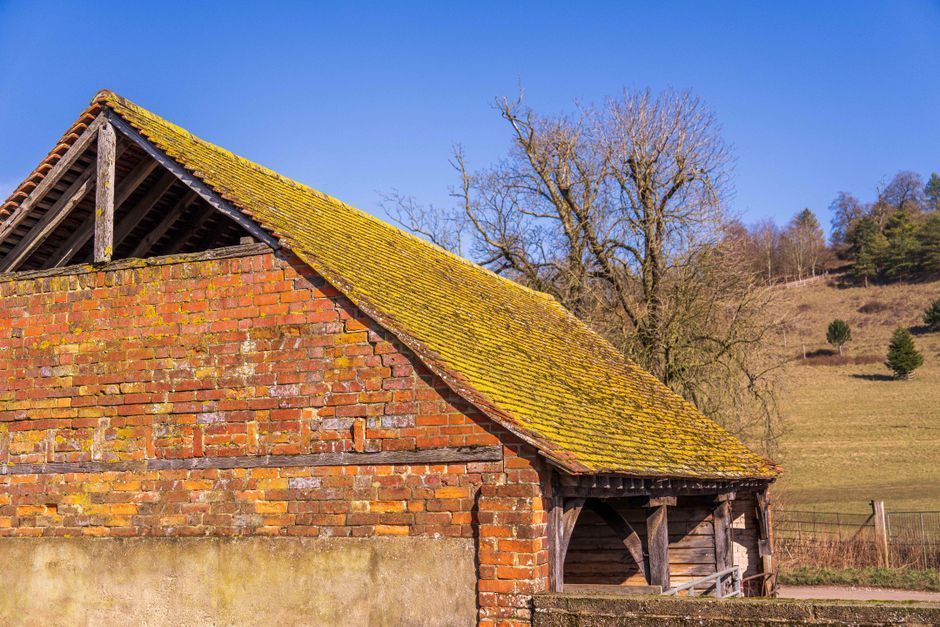
That same curved profile, however, creates a series of shallow troughs and ridges across the roof. Wind-blown debris, leaf litter and seed collect in those troughs, and rainwater drains more slowly through them than off a flat, smooth surface. It is an efficient roofing system, but it is also, almost by design, a good place for moss spores to settle and stay put.
3. Why Norfolk's Climate Feeds Moss Growth
It might seem strange that moss thrives here at all, because East Anglia, which includes Norfolk, is officially the driest region in the United Kingdom, with many parts receiving under 600mm of rain a year against a national average well above that figure. Low rainfall alone would suggest a roof that dries out quickly and stays relatively clear. In practice, Norfolk's dampness problem is less about how much rain falls and more about how long the county stays humid between showers.
Norfolk is flat, low-lying and close to the sea and the Broads, so morning mist, sea fog and heavy dew are common even on days with no measurable rainfall. Moss does not need heavy rain to spread; it needs sustained humidity and shade, and a landscape of slow-draining fenland, wide rivers and coastal flats provides exactly that. A pantile roof under a stand of trees near Wymondham or Dereham can stay damp for days after a light shower, even though the county as a whole is drier than most of England on paper.
North-facing roof slopes and roofs shaded by mature trees are particularly at risk, since they receive less direct sun to dry the surface between damp spells. Over a full year, that slow, repeated cycle of dampening and drying is what allows moss colonies to establish rather than any single wet week.
4. The Broads Effect: Humidity Without Heavy Rain
The Broads, a network of rivers and shallow lakes that stretches across the eastern part of the county and into Suffolk, has a status similar to a national park and covers a large area of low-lying, water-saturated land. Properties near the Broads, or within a few miles of its rivers and marshes, sit in a microclimate that stays noticeably more humid than the drier western half of the county around King's Lynn.
Homes bordering the Broads, or in villages tucked among the reed beds and grazing marshes, often see moss establish itself faster and more thickly than equivalent properties further inland. The combination of standing water, reed and marsh vegetation, and limited wind movement at ground level keeps the air around these roofs damp for long stretches, giving spores an easier foothold on both flint walls and pantile roofs.
5. How Moss Actually Takes Hold on a Roof
Moss reproduces through microscopic spores that travel on the wind and settle wherever conditions allow them to germinate. On a clean, well-maintained tile these spores are usually washed away before they can establish, but once a small amount of grit, pollen or leaf debris builds up in the trough of a pantile, spores have something to cling to and moisture to draw on.
A single spore can develop into a visible moss cushion within a season if conditions stay favourable, and that cushion then produces its own spores, spreading the colony sideways along the tile and up toward the ridge. Left unchecked over several years, moss can cover entire slopes of a roof, particularly those that face north or sit in the shade of overhanging trees.
Because Norfolk's older roofs so often combine both risk factors, absorbent flint or lime-mortared chimneys sitting above a rippled pantile surface, moss frequently gets a head start on these properties compared with a modern brick house with concrete interlocking tiles nearby.
6. The Hidden Damage Moss Can Cause
Moss is often dismissed as a cosmetic problem, but on an older roof it can do genuine harm. As moss cushions grow, they hold water against the tile surface for far longer than an uncovered tile would ever experience, and that persistent dampness can accelerate frost damage in a clay pantile during a hard Norfolk winter. Repeated freeze-thaw cycles on a waterlogged tile are one of the more common causes of cracked or spalled pantiles on older properties.
Moss and the debris it traps also washes down into gutters and downpipes, where it can form dense clumps that block water flow. That is a particular concern on Norfolk's rural and market-town properties, where long runs of guttering collect debris from surrounding trees and hedgerows. Anyone dealing with recurring blockages may find it useful to read about gutter cleaning across Norfolk's market towns and rural villages, since moss on the roof and blocked gutters below tend to go hand in hand.
Left long enough, moss growing along flint pointing can also work its rhizoids into small gaps in aged lime mortar, gradually widening cracks that already exist. On a listed or conservation-area property, that slow deterioration of original mortar is exactly the kind of damage that heritage guidance seeks to prevent, which is why gentle, considered cleaning methods matter more here than on an ordinary modern roof.

7. Coastal Salt Air and Exposed Roof Slopes
Properties along Norfolk's coast, from Cromer and Sheringham through to Great Yarmouth, face an additional factor: salt-laden sea air. Salt deposits can interact with organic growth on a roof in ways that make some algae and lichen more persistent, even where moss itself is kept in check by wind exposure. Coastal roofs also tend to face driving rain and onshore winds that push moisture into joints and under tile edges more forcefully than a sheltered inland roof would experience.
Further inland, around towns such as Holt and the villages between Norwich and the coast, exposure to wind is often lower, but shading from mature trees and hedgerows increases instead. Either way, the practical outcome is similar: certain roof slopes on almost every Norfolk property, whether coastal or inland, will collect moss faster than others, and a cleaning plan should treat those slopes as the priority rather than assuming the whole roof ages at the same rate.
Moss Removal Norfolk Homes Need Before It Spreads
Because of everything above, moss removal on a Norfolk roof is rarely a one-off job that never needs repeating. The same conditions that allowed moss to establish in the first place, humidity, shade, and materials that hold moisture, are permanent features of the county, so moss will always be trying to come back. The realistic goal is to remove existing growth safely, without damaging old clay pantiles or historic flint pointing, and then keep on top of regrowth with periodic checks rather than waiting for it to become a structural concern.
On older clay pantile and flint roofs in particular, the safest removal methods avoid high-pressure jet washing, which can crack aged tiles, strip protective patina, or force water beneath tiles that were never designed to withstand that kind of force. A gentler, low-pressure approach that lifts moss without disturbing the tile surface is generally the better fit for the kind of period roofs found across Norfolk, and the piece on soft washing Norfolk's period clay pantile roofs goes into more detail on how that process works.
- Flint and lime mortar absorb moisture slowly , giving moss spores a stable, damp surface to establish on that modern brick and cement rarely provide.
- Pantiles trap debris in their curved troughs , creating pockets where organic matter and moisture build up even on a roof that sheds rain quickly overall.
- The Broads and coastal humidity keep roofs damp between showers, regardless of Norfolk's low annual rainfall figures.
- North-facing and shaded slopes age faster than sun-exposed ones, and usually need attention first.
- Unchecked moss accelerates frost damage and gutter blockages , turning a cosmetic issue into a maintenance one.
Frequently Asked Questions
Why does moss grow so much faster on old Norfolk cottages than on newer houses?
Older cottages usually combine flint or soft brick walls with clay pantile roofs, both of which absorb and hold moisture longer than the dense concrete tiles and cement pointing used on newer builds. Expect an older property to need moss removal more often, particularly on shaded or north-facing slopes.
Does moss actually damage a roof, or is it just an appearance issue?
Treat visible moss as an early warning rather than a purely cosmetic issue. It holds water against tiles through winter frosts, which can worsen cracking on older clay pantiles, and it sheds debris into gutters that can lead to blockages and overflow further down the line.
Is pressure washing safe for removing moss from a Norfolk pantile roof?
Avoid high-pressure jet washing on older clay pantiles or flint-adjacent brickwork, since it can strip the tile surface, dislodge tiles, or force water into joints that were never built to take that pressure. A lower-pressure, controlled approach is generally safer for period roofing materials.
How often does a Norfolk roof need moss removal?
Check a shaded or north-facing roof slope every year or two, and a more exposed, sun-facing slope every few years. Properties near the Broads or under mature trees usually need attention more frequently than an open, well-ventilated roof elsewhere in the county.
How much does professional roof moss removal cost in the UK?
Expect pricing to vary with roof size, pitch, access, and how much moss has built up, along with regional labour rates and whether gutter clearance is included alongside the roof itself. Get a clear, itemised quote after an on-site or photo-based assessment rather than relying on a generic per-square-metre figure, since the amount of scaffolding or access equipment needed can change the total considerably.
Can moss removal damage listed or conservation-area properties?
Choose a careful, low-pressure method on any flint, thatch-adjacent, or listed building, since aggressive cleaning can damage historic pointing or tile surfaces that conservation guidance is specifically designed to protect. Always check whether listed building consent or conservation area rules apply before any exterior work begins.
Worried about moss building up on a flint, brick or pantile roof anywhere in Norfolk? Ben's Roof Cleaning works across the county, from Norwich and the Broads to the market towns and coastal villages further afield. Get in touch through the contact page or call 0132 880 0373 to arrange an assessment.
Norfolk's Roofs Will Always Attract Moss, But They Do Not Have to Suffer For It
Flint and clay pantiles have shaped the look of Norfolk for centuries, and that same combination of absorbent stone, curved clay tiles and a humid, low-lying landscape will always give moss somewhere to grow. That is simply the nature of building in this county, not a sign that a particular roof has been neglected. What changes the outcome is how quickly moss is spotted and how carefully it is removed, since a considered, low-pressure approach protects old tiles and mortar while a rushed or overly aggressive one can cause the very damage homeowners are trying to avoid. Treating moss removal as routine maintenance, rather than an emergency reaction, is what keeps Norfolk's older roofs looking right and functioning properly for decades to come.