Gutter Cleaning Across Norfolk's Market Towns and Rural Villages
Drive between the market towns of Norfolk, from Wymondham to Dereham, Holt to Aylsham, and the same pattern shows up again and again: mature trees lining the streets, old pantile and slate roofs close together, and long runs of guttering doing a quiet but essential job. Gutter cleaning Norfolk homeowners arrange each autumn is not just tidying up leaves for appearance's sake. In a county built on flat, tree-shaded market towns and low-lying rural villages, gutters are one of the few things standing between a well-drained roof and water finding its way into walls, foundations and timber. Understanding what makes Norfolk's gutters block up so often is the first step to keeping on top of it.
The quick answer: Norfolk's market towns and rural villages combine mature street trees, older pantile and slate roofs, and a flat, low-lying landscape near the Broads and its rivers, all of which load gutters with leaves, moss and silt faster than in many other parts of the country. Regular gutter cleaning Norfolk properties need prevents overflow, damp brickwork, and the kind of slow water damage that is far more expensive to put right than a routine clear-out.
1. Why Norfolk's Rural Geography Puts Extra Strain on Gutters
Much of Norfolk sits low and flat, with a dense network of hedgerows, mature trees and farmland running right up to village boundaries. Unlike a hillside town where wind and gradient help debris move on, a Norfolk village street often sits in relatively still air, and windblown leaves and seed pods settle directly into gutters rather than being carried away.
Properties near woodland edges, orchards, or the wide hedgerows that separate Norfolk's fields are particularly exposed to this. A single autumn can deposit a season's worth of leaf litter into a gutter run that, on paper, looks perfectly maintained the rest of the year.
2. Market Towns With Tree-Lined Streets
Towns such as Wymondham, Dereham and Holt owe much of their character to mature street trees and Georgian and Victorian terraces set close together. That same charm creates a maintenance challenge: overhanging branches drop leaves, twigs and blossom directly onto roofs and into gutters below, often for months at a stretch through autumn and into early winter.
In these older town centres, buildings frequently share party walls and closely spaced roof lines, meaning a blocked gutter on one property can quickly affect a neighbour's wall or shopfront below. That density is part of why routine gutter cleaning matters more in a market town centre than it might on an isolated, detached rural property with more clearance around it.
3. Pantile Roofs and Valley Gutters: A Design Quirk Behind Blockages
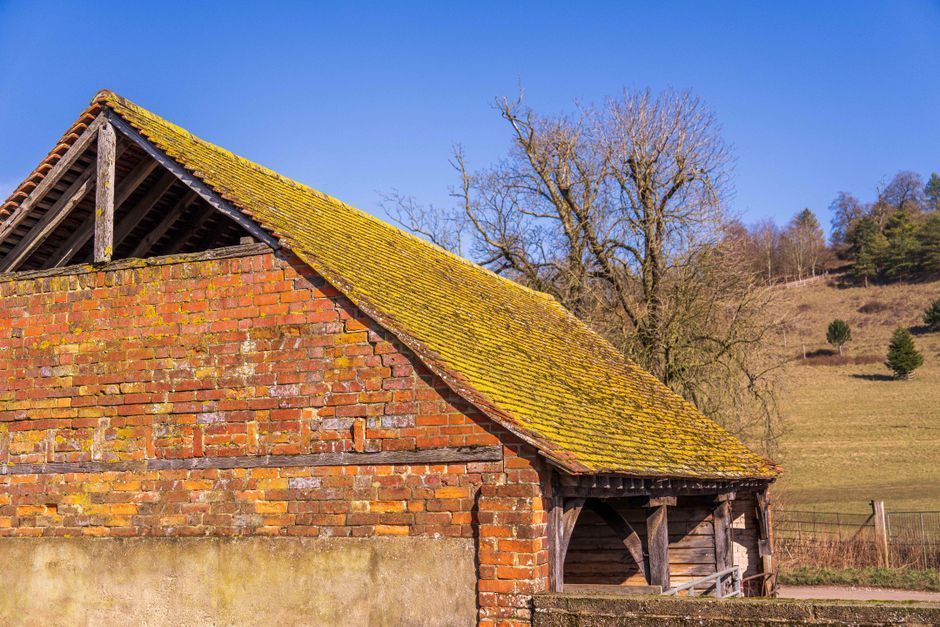
Norfolk's clay pantile roofs, which became common across the county after being imported from Holland in the 17th century, have a distinctive S-shaped, curved profile. That curve sheds rainwater efficiently down the face of the tile, but it also means water arrives at the guttering in a slightly different pattern than it does from a flat interlocking tile, often with more force at the lowest points of a roof valley.
Where two roof slopes meet at a valley, debris that has washed down both sides tends to concentrate at the same point, which is often directly above a length of guttering that then bears more silt and grit than the rest of the run. On older Norfolk properties with cast iron or asbestos-cement guttering rather than modern uPVC, that concentrated debris and moisture can accelerate corrosion or cracking if it is not cleared regularly.
For homeowners trying to understand how their roof material affects maintenance more broadly, the comparison in clay pantile, concrete or slate roofing across Norfolk covers how each type behaves differently when it comes to cleaning and drainage.
4. The Broads and Riverside Villages: Extra Debris From Wetland Surroundings
The Broads, a network of rivers and shallow lakes covering much of eastern Norfolk with a status similar to a national park, brings its own set of debris challenges to nearby properties. Villages along its rivers and staithes sit close to reed beds, willow and alder trees, and seasonal wildfowl activity, all of which contribute organic material that ends up in gutters over the course of a year.
Riverside cottages around the Broads often report gutters filling with a mix of leaf matter, seed heads and fine silt carried on damp air, a combination that can form a dense, compacted blockage far more stubborn than dry leaves alone. Properties in these areas typically need gutter clearance more frequently than equivalent homes further from the water.
5. Norfolk's Rainfall Pattern and Why Gutters Still Overflow
It might seem odd that gutter overflow is such a common complaint in a county that receives comparatively little rain. East Anglia, which includes Norfolk, is recognised as the driest region in the United Kingdom, with many areas receiving under 600mm of rainfall a year. Lower overall rainfall does not mean gutters cope better, though, because a blocked gutter overflows just as easily during a single heavy downpour as it would during a genuinely wet season elsewhere in the country.
In fact, drier spells can make the problem worse in one specific way: debris in a gutter dries out, compacts, and becomes harder to remove by the time the next heavy shower arrives, rather than washing through naturally. A gutter that looked fine after a light summer shower can overflow dramatically during an autumn storm once leaf litter has had weeks to settle and bind together.
6. What Happens When Norfolk Gutters Are Left Blocked
Overflowing gutters rarely stay a minor nuisance for long. Water spilling over the front edge of a gutter runs straight down external walls, and on older Norfolk properties built with flint, soft brick or lime mortar, that repeated soaking can accelerate erosion of pointing and increase the risk of damp inside the building.
Blocked downpipes can also force water back under roof tiles at the eaves, encouraging exactly the kind of trapped moisture that helps moss and algae establish on the roof above. Anyone who has already noticed moss creeping across a roof slope may find useful background in why Norfolk's flint and pantile roofs are a magnet for moss, since the two problems, blocked gutters and roof moss, very often appear together.
In winter, standing water in a blocked gutter can freeze, expand, and place additional strain on old cast iron brackets and joints, which is a particular concern on the period properties found throughout Norfolk's market towns and villages.
7. Listed Buildings and Cast Iron Guttering: Handling With Care
Many of Norfolk's market towns, including parts of Holt, Wymondham and the historic core of Norwich, contain listed buildings where original cast iron guttering and downpipes are still in place. These fittings are often decades or even a century old, and while they are generally robust, they can be brittle at joints and fixings that have corroded over time.
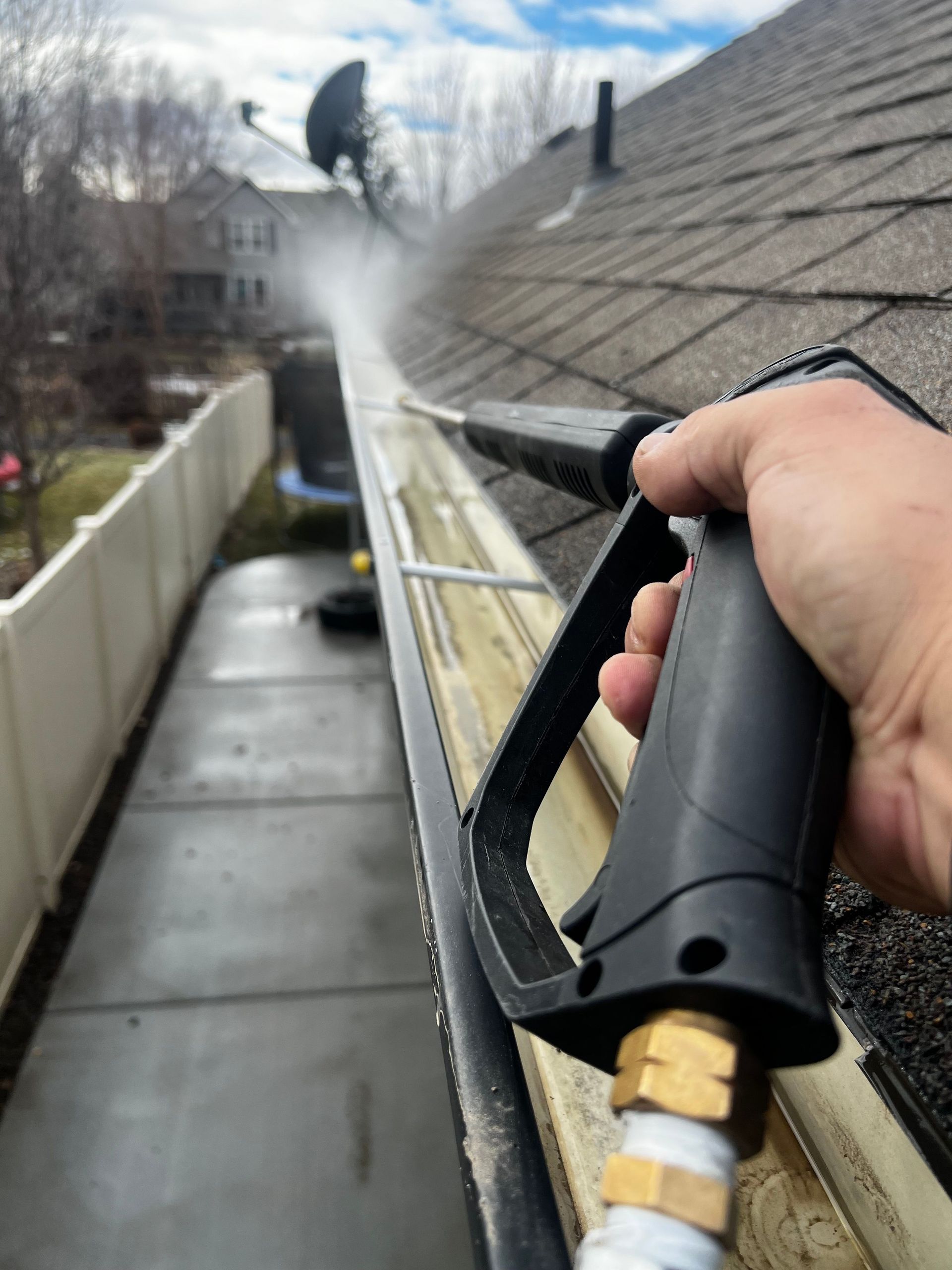
Clearing debris from this kind of guttering calls for a careful, hands-on approach rather than aggressive tools that risk cracking old ironwork or dislodging loose brackets. On a listed property, damage to original guttering can also raise questions under conservation area or listed building rules, so a considered, low-impact clearance is generally the safer route regardless of how stubborn the blockage looks.
Gutter Cleaning Norfolk Properties Need Season by Season
Because the causes of blockage in Norfolk change through the year, from spring blossom and pollen to summer seed heads and the heavy leaf fall of autumn, a single annual clean rarely covers every risk. Properties under mature trees, near the Broads, or in tightly packed market town centres generally benefit from a check both before and after the main autumn leaf drop, with an additional look after any particularly stormy spell.
Rural properties with longer runs of guttering and fewer overlooking neighbours sometimes go unnoticed for longer between checks simply because a blockage is less visible from the ground. Building a simple seasonal routine, checking gutters after leaf fall and again after any period of high wind, catches most problems before they progress to overflow or water damage.
- Mature street trees in market towns such as Wymondham and Holt drop leaves and blossom directly into nearby gutters for much of the year.
- Pantile roof valleys concentrate debris at specific points along a gutter run, ageing that section faster than the rest.
- Properties near the Broads collect wetland debris , including reed matter and silt, that can compact into stubborn blockages.
- Norfolk's low rainfall does not prevent overflow , since dried, compacted debris blocks water flow just as effectively as a heavy build-up elsewhere.
- Listed buildings with cast iron guttering need a gentler clearance approach to avoid damaging brittle, aged fittings.
Frequently Asked Questions
How often should gutters be cleaned on a Norfolk property?
Check gutters at least twice a year, once after the main autumn leaf fall and again in spring, and add an extra check after any major storm. Properties under mature trees or near the Broads often need attention more frequently than an open, exposed roof elsewhere in the county.
What are the warning signs that Norfolk gutters need clearing?
Look for water spilling over the front edge of a gutter during rain, plant growth sprouting from the gutter itself, sagging sections, or damp patches appearing on walls below the roofline. Any of these point to a blockage that is already affecting drainage.
Are older cast iron gutters on Norfolk period properties safe to clean?
Treat cast iron guttering carefully, since decades of exposure can leave joints and brackets brittle even when the ironwork looks solid. Use hand clearance rather than aggressive tools, and check fixings for corrosion while debris is being removed.
Does living near the Norfolk Broads mean gutters need cleaning more often?
Yes, expect properties near the Broads or its rivers to need more frequent gutter clearance, since reed matter, silt and organic debris from the surrounding wetland habitat build up faster than in a drier, more open part of the county.
How much does professional gutter cleaning cost in the UK?
Expect the cost to depend on property size, the number of storeys, roof access, and how overdue the clearance is, along with regional labour rates and whether specialist equipment is needed for a hard-to-reach run. Ask for a clear quote after a look at the property rather than assuming a flat nationwide rate, since access and condition vary considerably from one property to the next.
Can blocked gutters cause damp inside a house?
Yes, water that repeatedly overflows down an external wall can work its way into brickwork and, over time, contribute to damp appearing on interior walls near the roofline. Clearing gutters promptly once overflow is noticed helps prevent this kind of damage from developing further.
Noticed overflowing gutters or debris building up on a roof anywhere in Norfolk, from a Norwich terrace to a village cottage near the Broads? Ben's Roof Cleaning covers market towns and rural properties across the county. Get in touch through the contact page or call 0132 880 0373 to arrange an assessment.
Keeping Norfolk's Gutters Clear Protects More Than Just the Roof
Norfolk's mix of mature market town trees, wetland villages around the Broads, and older pantile roofs all combine to load gutters with debris faster than in many parts of the country, regardless of how little rain actually falls here on average. A gutter left blocked through a season does not just look untidy, it can send water into brickwork, encourage moss on the roof above, and put unnecessary strain on old cast iron fittings found throughout the county's period properties. Treating gutter cleaning as a routine, seasonal task rather than an occasional afterthought is what keeps Norfolk's market town terraces and rural cottages alike free from the slow, avoidable damage that a blocked gutter eventually causes.