Protecting Norfolk Conservatory and Extension Roofs from Moss and Debris
Conservatories and single-storey extensions are a common sight across Norfolk, from Victorian terraces in Norwich with a modest rear conservatory bolted on, to newer builds near King's Lynn and Great Yarmouth with a full glazed garden room. These low-pitch roofs sit at a different angle to the main house roof, usually see far less direct sun, and often end up shaded by fences, walls or garden trees. That combination makes them genuinely prone to moss, algae and general debris build-up, and moss removal Norfolk homeowners plan for the main roof does not always extend to the conservatory or extension behind it, which is where problems tend to creep in unnoticed.
The quick answer: conservatory and extension roofs in Norfolk usually need checking and clearing more often than the main house roof, because their shallow pitch, shading and material (glass, polycarbonate or flat felt) all encourage moss and debris to sit and build up rather than wash away.
1. Why conservatory roofs need a different moss removal Norfolk approach
A conservatory or extension roof rarely has the steep pitch of a traditional tiled roof, and that pitch difference matters enormously for how debris behaves. On a steep tiled roof, rain tends to carry loose grit, seeds and leaves down towards the gutter fairly quickly. On a shallow-pitched conservatory roof, the same debris often just sits, giving moss spores, algae and lichen far more time to settle and establish. A sensible moss removal Norfolk plan treats the conservatory or extension as its own item, checked on its own schedule, rather than assuming it will be covered incidentally whenever the main roof gets attention.
Position adds to the problem. Conservatories are frequently built against a north or east-facing wall of the house to make the most of garden space, which often means less direct sun than the main roof gets, and slower drying after rain or morning dew.
2. Glass conservatory roofs: where moss and algae actually take hold
On a glass conservatory roof, moss and algae rarely grow across the glass panes themselves, since smooth glass gives spores little to grip. The real build-up happens in the aluminium or uPVC glazing bars between panes, and along the base gutter where the roof meets the wall of the house. These narrow channels trap leaves, moss fragments blown from the main roof, and general grit, and they hold moisture for long stretches after rain.
Left unchecked, that build-up in the glazing bars can start to look like a green or black line running across the whole roof, even though the glass panes themselves are unaffected. It also tends to feed water back towards the seals rather than away from them, which is worth checking during any general roof inspection.
3. Polycarbonate roofs: cloudiness as much as growth
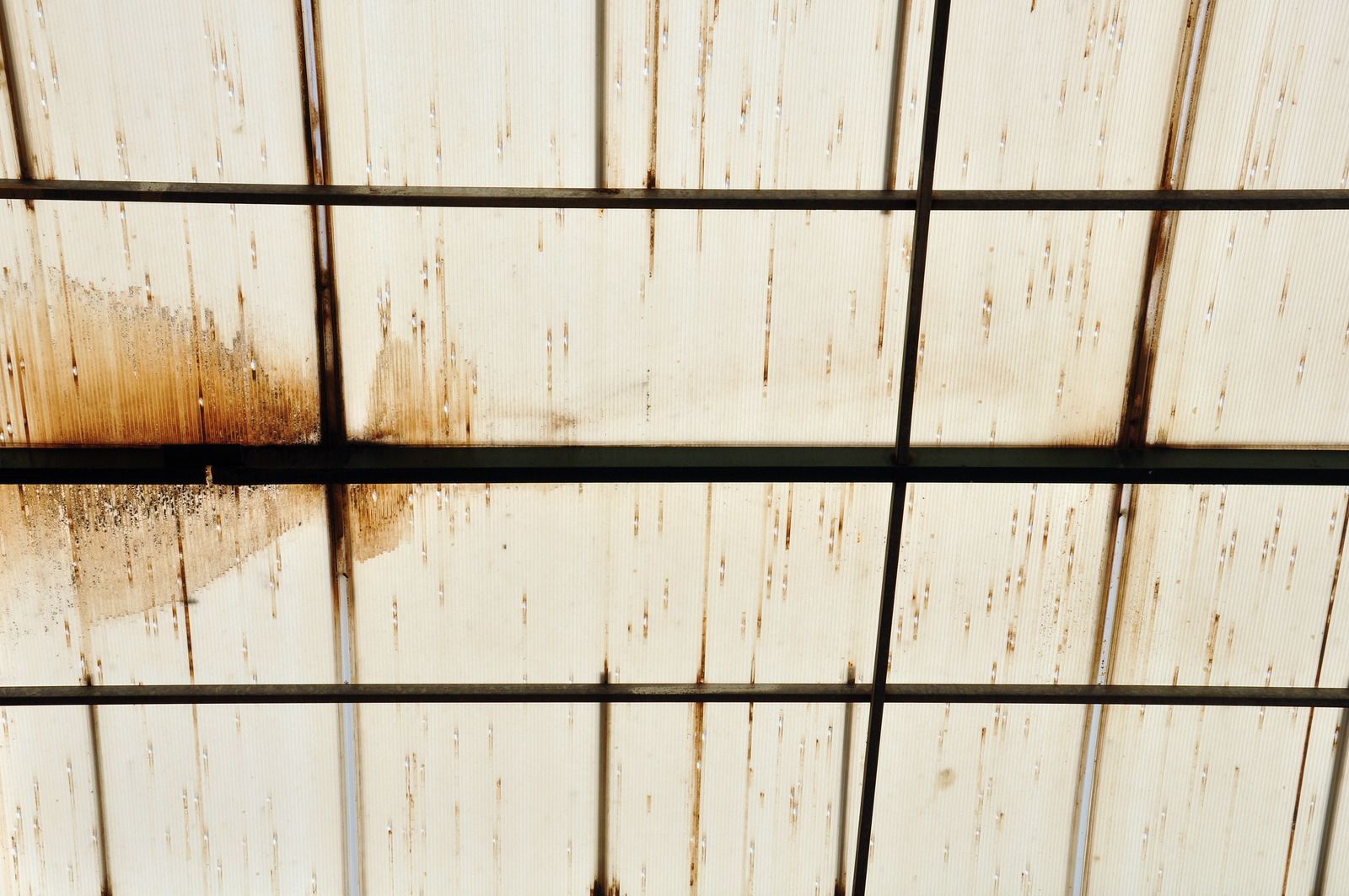
Polycarbonate is a common, more affordable roofing choice for both conservatories and rear extensions across Norfolk. Unlike glass, polycarbonate has a slightly textured surface, which gives algae and light moss growth more to hold onto over time. It also tends to develop a general haze or cloudiness with age from UV exposure and surface grime, separate from any organic growth, which can make it harder to spot moss or algae developing until it is fairly established.
Because polycarbonate roofs are usually multi-wall panels with narrow channels inside them, debris and moisture can also work into the panel joints at the ridge and eaves, an area worth checking specifically rather than assuming the panel surface tells the whole story.
4. Flat, felt and GRP extension roofs: drainage is the real issue
Many Norfolk extensions, particularly kitchen and utility extensions built over the last few decades, use a flat or very low-pitch roof finished in felt, GRP fibreglass, or a single-ply membrane rather than glass or polycarbonate. These roofs are usually hidden from street view, sitting behind a parapet or below an upstairs window, which means they are frequently the most neglected roof surface on the whole property.
Flat roofs drain slowly by design, and any moss, leaves or grit that collects near the outlet can cause standing water to linger for days after rain, a particular risk during Norfolk's damp winters. Standing water encourages algae and moss far more readily than a roof that drains promptly, and over time it can also stress the roofing membrane itself, which is a good reason to keep these surfaces clear even though they are rarely visible from ground level.
5. Norfolk's climate is unusually tough on low-pitch roofs
Norfolk's mild, damp winters and the higher humidity around the Broads and coastal marshes create ideal conditions for moss and algae generally, and low-pitch roofs feel that effect more acutely than steep tiled roofs do. Without the benefit of a steep pitch to shed water quickly, a conservatory or extension roof in Norfolk can stay damp for days at a time through autumn and winter, exactly the conditions moss needs to establish.
For background on why Norfolk's climate favours moss so consistently across roof types, the article on why Norfolk's flint and pantile roofs are a magnet for moss covers the underlying conditions, most of which apply just as strongly, if not more so, to a shallow-pitched conservatory or extension roof.
6. Overhanging trees and garden boundaries add extra debris
Conservatories and extensions are often built close to garden boundaries, fences and mature planting, especially in Norfolk's older residential streets in Norwich and in village properties around the county where gardens tend to be well established. Overhanging branches drop leaves, twigs, and in spring, blossom and sap directly onto a low roof positioned well within reach of the canopy above.
Because a conservatory or extension roof sits so much lower than the main roof, it also catches debris blown off the main roof during wind and rain, effectively acting as a collection point for material shed from higher up the property. This is one of the less obvious reasons conservatory roofs often look worse than the main roof above them, despite receiving less initial exposure to weather.
7. Moss and debris affect more than just appearance
A moss-covered or debris-laden conservatory roof is not only a cosmetic issue. A build-up of organic material across a glass or polycarbonate roof reduces the amount of natural light reaching the room below, which matters in a space that is usually built specifically to let light in. On flat extension roofs, the same build-up can interfere with drainage and, over years of neglect, contribute to premature wear of the roofing membrane.
Conservatory and extension roofs are also frequently tied into the same gutter run as the main house, so debris washed off a badly overgrown low roof can end up adding to blockages further along the guttering system, an issue covered in more general terms in the guide to how roof material shapes cleaning across Norfolk, which looks at how different surfaces on the same property can each need their own approach.
8. A gentle approach suits delicate low-pitch surfaces
Glass, polycarbonate and flat roofing membranes are all more easily scratched or damaged by harsh scraping or high-pressure jets than a traditional clay or concrete tile roof would be. A gentler, lower-pressure cleaning approach, the same principle used on older clay pantile roofs, tends to suit these surfaces well, removing moss and grime without risking scratches to glass or polycarbonate, or damage to a felt or GRP membrane.
The article on soft washing as the safe way to clean period clay pantile roofs explains the general principle behind gentler cleaning methods, many of which apply equally well to a conservatory or extension roof that needs careful handling rather than aggressive scrubbing.
- A green or black line along the glazing bars usually means moss or algae building up between glass panes rather than on them.
- A persistent haze on polycarbonate panels can be UV cloudiness, organic growth, or a combination of both.
- Standing water on a flat roof after rain has stopped elsewhere points to a blocked outlet or debris at the drainage point.
- Reduced natural light in the conservatory on an otherwise bright day often reflects build-up across the roof surface.
- Leaves and twigs collecting at the base gutter should be cleared regularly to stop moss establishing there.
- Dark patches near the join with the main house wall suggest moisture is being trapped rather than draining away.
Frequently Asked Questions
Does a conservatory roof need cleaning as often as the main house roof?
Usually more often, not less, since the shallow pitch and shading typical of conservatory roofs encourage moss and debris to sit rather than wash away. Check it separately rather than assuming a main roof clean has covered it.
Can pressure washing be used on a glass or polycarbonate roof?
High pressure can scratch polycarbonate and stress glazing seals, so a gentler, lower-pressure method is generally safer for these surfaces. Ask what approach is planned before booking work on a conservatory roof.
How much does moss removal for a conservatory or extension roof cost?
Costs vary across the UK market based on roof size, material, access and how much build-up has accumulated, so a specific quote for your property gives a far more accurate figure than a general estimate. A free, no-obligation quote is the most reliable starting point.
Why does my conservatory roof look worse than the tiled roof above it?
Low-pitch roofs drain more slowly and often sit in more shade, and they also catch debris blown down from higher roof surfaces during wind and rain, so they can accumulate moss and grime faster despite receiving similar exposure overall.
Does moss on a flat extension roof actually cause damage?
Over time, yes. Moss and debris can block drainage outlets, leading to standing water that stresses the roofing membrane, so keeping the surface clear helps protect the roof rather than being purely cosmetic.
Is it worth cleaning a conservatory roof myself?
Working at height on a sloped glass or polycarbonate roof carries real risk of injury or damage to the roof itself, so many homeowners prefer to have it done professionally, particularly for anything beyond a light surface sweep from ground level.
Noticed moss building up on your conservatory or extension roof?
Ben's Roof Cleaning provides roof cleaning, moss removal and gutter cleaning across Norfolk, with over 15 years of experience. Get in touch or call 0132 880 0373
for a free, no-obligation quote.
Low-pitch roofs deserve their own place in a Norfolk maintenance routine
Conservatory and extension roofs across Norfolk face a harder job than the main roof above them, with a shallower pitch, more shade, and drainage that was never designed to shed debris quickly. Whether the roof is glass, polycarbonate or a flat felt membrane, treating it as a separate item on the maintenance list, checked and cleared in its own right rather than assumed to be covered by whatever happens to the main roof, keeps light streaming into the room below and protects the roof itself from the slow damage that standing moss and trapped moisture can cause.