Signs a Norfolk Roof Needs Cleaning Before Winter Sets In
As the nights draw in across Norfolk and the first proper frosts arrive around Norwich, Dereham and the villages of the Broads, roofs that have carried a summer's worth of moss, algae and gutter debris are about to face their toughest test of the year. Roof cleaning Norfolk homeowners schedule in September and October is rarely about appearances alone. It is about catching the specific warning signs that a roof is not ready for the freeze-thaw cycles, driving rain and coastal winds that Norfolk's winter brings, before that weather turns a manageable problem into an expensive one. Knowing what to look for now can save a great deal of trouble come January.
The quick answer: The clearest signs a Norfolk roof needs cleaning before winter are black streaking or algae staining, visible moss clumps in valleys and along ridges, gutters that are already overflowing, damp patches appearing indoors, and tiles that look slipped, cracked or lifted. Any of these point to a roof that will likely fare worse once frost, driving rain and coastal wind set in, and addressing them in autumn is far cheaper than repairing winter damage afterward.
1. Why Autumn Is the Deadline for Norfolk Roof Checks
Norfolk's winters bring a specific combination of risks: repeated freeze-thaw cycles, driving rain pushed inland by North Sea winds, and long stretches of low light that give damp surfaces little chance to dry out. A roof already carrying moss, blocked gutters or loose tiles heading into that season has far less capacity to cope than one that has been checked and cleared in autumn.
Once the first hard frost arrives, typically from late November onward across most of the county, any water trapped in a crack or beneath a loose tile can freeze, expand and cause damage that was entirely avoidable a few weeks earlier. That narrow autumn window is why so many Norfolk homeowners treat September and October as the natural time to check their roof.
2. Sign One: Black Streaks and Algae Staining
Dark streaking running down from a ridge or chimney is usually algae rather than simple dirt, and it tends to appear first on north-facing slopes or areas shaded by trees, exactly the conditions found on many Norfolk properties near mature hedgerows or woodland. This staining is often the earliest visible sign that a roof surface is holding moisture longer than it should.
Left through winter, that same moisture retention becomes a bigger problem, since algae-affected areas typically take longer to dry after rain, extending the time the roof spends waterlogged during the wettest and coldest months of the year.
3. Sign Two: Visible Moss Clumps on Ridges and Valleys
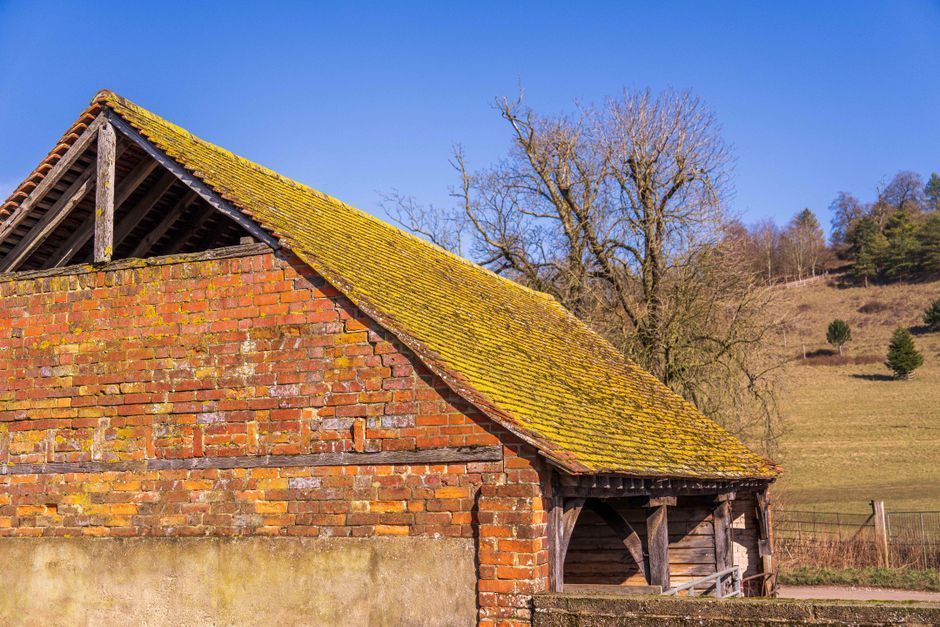
Moss tends to establish first in roof valleys, around chimney bases, and along ridge lines, the places where debris collects and moisture lingers longest. On Norfolk's clay pantile roofs, with their curved, ridged profile, these clumps can grow surprisingly thick before they become obvious from ground level.
Moss holds water directly against the tile surface, and that persistent dampness is precisely what accelerates frost damage once temperatures drop. A closer look at why this happens so readily on Norfolk roofs is covered in why Norfolk's flint and pantile roofs are a magnet for moss, and autumn is the last practical window to deal with it before winter sets in properly.
4. Sign Three: Gutters Already Overflowing
If gutters are overflowing during ordinary autumn rain, before the heaviest winter storms have even arrived, that is a clear sign the system is already blocked and will only get worse. Norfolk's market towns and tree-lined villages generate a steady supply of leaf litter through September and October that can fill a gutter run within a matter of weeks.
A gutter that overflows in October is likely to freeze solid in December, placing extra strain on brackets and joints, particularly the original cast iron fittings still found on many older Norfolk properties. More detail on what drives this seasonal build-up appears in gutter cleaning across Norfolk's market towns and rural villages.
5. Sign Four: Damp Patches Appearing on Ceilings or Walls
By the time damp patches show up on an internal ceiling or upper wall, water has usually been finding its way past the roof covering for some time already. This is one of the more serious signs on this list, since it suggests the problem has moved beyond the surface and started to affect the structure underneath.
On older Norfolk properties with flint or soft brick construction, this kind of moisture ingress can be particularly troublesome, since these materials absorb and hold water differently to modern brick and can take a long time to dry out fully once affected.
6. Sign Five: Slipped, Cracked or Lifting Tiles
A tile that has slipped out of position, cracked, or is visibly lifting at one edge is an immediate priority, since it creates a direct route for water to enter the roof structure. On clay pantile roofs, a slipped tile also disrupts the interlocking pattern of the tiles around it, sometimes allowing wind-driven rain to get underneath neighbouring tiles as well.
Norfolk's exposed, flat landscape means wind loading on roofs can be considerable, particularly near the coast around Great Yarmouth and Cromer, and a tile that has already started to move is far more likely to be dislodged completely during a winter storm.

7. Why Norfolk Winters Make These Signs Worse
Norfolk sits in East Anglia, officially the driest region of the United Kingdom, yet the county's winters still bring enough rain, combined with persistent coastal humidity and low winter sun, to turn a minor autumn issue into a much larger one. Water that would evaporate quickly in summer can sit on a roof surface for days during a grey Norfolk December.
Repeated freeze-thaw cycles are the specific mechanism that turns small cracks into larger ones. Water that seeps into a hairline crack in a clay tile expands as it freezes, widening the crack slightly each time, and by the time spring arrives a minor imperfection from October can have become a genuine structural weakness.
Why a Roof Cleaning Norfolk Visit Matters Before These Signs Worsen
Ignoring these signs through winter rarely means the problem stays the same size. Moss keeps growing even in cold weather provided there is enough moisture, gutters that are already blocked collect more debris as the last leaves fall, and any water finding its way past a damaged tile has months of freezing and thawing to make the damage worse before anyone gets back up on the roof in spring.
Addressing these signs in autumn, while the weather still allows safe access and while any necessary work can be carried out without a genuine emergency, is almost always the more straightforward and less disruptive route. It also gives time to check whether a roof cleaning Norfolk visit should be combined with a full gutter clearance, since the two jobs frequently go hand in hand on the county's older properties.
- Black streaking on north-facing or shaded slopes usually signals algae holding moisture on the roof surface.
- Moss clumps in valleys and along ridges trap water against tiles exactly where frost damage is most likely to start.
- Gutters overflowing in autumn rain will almost certainly freeze and worsen once winter arrives properly.
- Damp patches indoors mean water has already reached the structure beneath the roof covering.
- Slipped or cracked tiles need addressing before winter wind loading has a chance to dislodge them further.
Frequently Asked Questions
What time of year should a Norfolk roof be checked before winter?
Aim to check a roof in September or October, before the first hard frosts typically arrive from late November onward. This gives enough time to arrange any cleaning or repair work while access is still straightforward.
Is moss on a roof always a problem, or is some growth normal?
Treat any visible moss as worth monitoring, since even a small amount can expand quickly once autumn dampness sets in. It does not need to be an emergency immediately, but it should not be left unchecked heading into winter.
Can a homeowner check for these warning signs themselves?
Yes, most of these signs, staining, visible moss, overflowing gutters and obviously displaced tiles, can be spotted from ground level with binoculars or from an upstairs window. Avoid climbing onto the roof itself without proper safety equipment and experience.
Do gutters need clearing at the same time as roof cleaning?
It is generally sensible to check both together, since moss and debris washed off a roof often ends up in the gutters below, and a blocked gutter can undo the benefit of a clean roof by letting water back up at the eaves.
How much does pre-winter roof cleaning cost in the UK?
Expect the cost to depend on roof size, pitch, how much moss or debris has built up, and site access, along with regional labour rates and whether gutters are cleared in the same visit. Get a clear quote after an assessment rather than relying on a flat estimate, since the amount of preparatory work needed varies considerably between properties.
What should be done if a slipped or cracked tile is spotted?
Treat a slipped or cracked tile as a priority rather than something to leave until spring, since it creates a direct path for water into the roof structure. Arrange for it to be assessed and, if needed, repaired before winter weather arrives.
Spotted any of these warning signs on a roof anywhere in Norfolk before winter arrives? Ben's Roof Cleaning covers properties across the county, from Norwich to the coast and the market towns in between. Get in touch through the contact page or call 0132 880 0373 to arrange an assessment.
Catching These Signs Early Is What Gets a Norfolk Roof Through Winter
None of the signs covered here are dramatic on their own, which is exactly why they get overlooked until winter weather makes them impossible to ignore. Black streaking, a patch of moss in a valley, a gutter that overflows a little too easily, these are all small, manageable problems in September that can become genuinely expensive ones by February once frost, driving rain and coastal wind have had months to work on them. Checking a Norfolk roof properly before winter sets in, and acting on what that check finds, remains the simplest way to avoid the kind of damage that only shows up once the weather has already done the harm.